
The real reason most Shopify stores don’t convert
Let’s be honest for a second.
Most Shopify stores don’t have a product problem. They don’t even have a traffic problem.
They have an image problem.
You can have a great product, competitive pricing, and a solid brand idea, but if your product images don’t immediately communicate quality and trust, people won’t buy. It happens silently. No one tells you your images are the issue. They just leave.
In ecommerce, your images are not just “visuals.” They are the product experience. Customers cannot touch, feel, or try anything. Everything they decide is based on what they see.
That means your product images are doing most of the selling for you.
Why product images matter more than anything else
When someone lands on your product page, they are not reading your description first. They are scanning your images.
Within a few seconds, they decide:
- Does this look like a serious brand
- Does this product feel high quality
- Can I trust this store
If your images look inconsistent, low effort, or generic, it creates friction. Even if your product is great, the perception becomes weaker. On the other hand, strong visuals can instantly elevate a product and make it feel premium, even before a single word is read.
That is why improving your product images is often the fastest way to increase conversion rate.
The most common product image mistakes
Before improving anything, it is important to understand what is going wrong. Most Shopify stores repeat the same mistakes.
One of the biggest issues is inconsistency. Different products have different backgrounds, lighting styles, and tones. This makes the store feel unstructured and lowers trust. A strong brand should feel cohesive across every product.
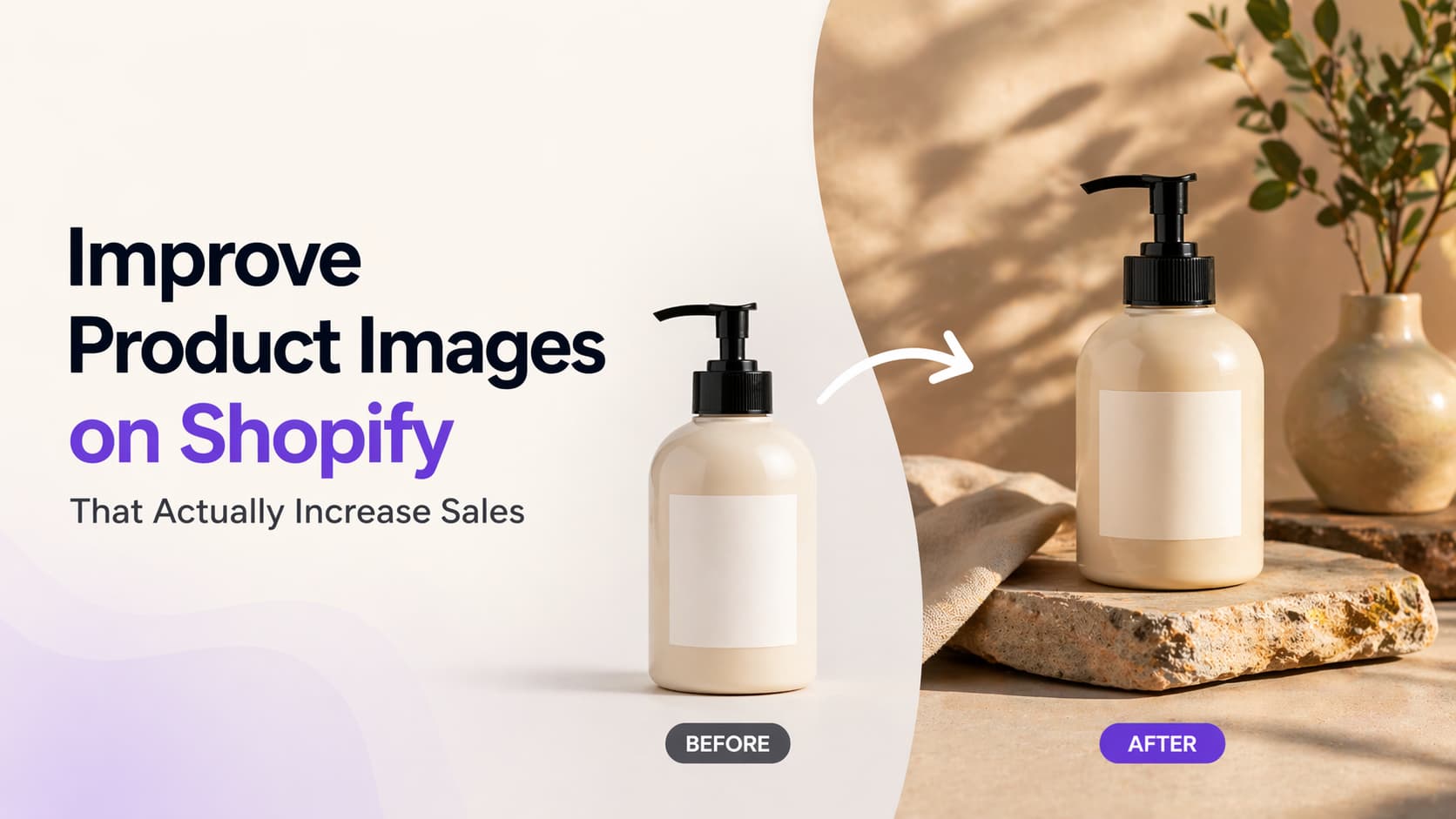
Another common mistake is relying only on plain white background images. While white backgrounds are useful, especially for clarity, they do not create emotion or context. Customers need to see how the product fits into real life.
Low-quality images are still surprisingly common. Blurry photos, poor lighting, or low resolution instantly reduce perceived value. Even small improvements in clarity and lighting can change how premium a product feels.
Finally, many stores lack variation. Showing the same angle multiple times does not help the customer make a decision. People want to explore the product visually from different perspectives.
How to actually improve your product images
Improving product images does not require a full redesign or a massive budget. The key is to focus on a few high-impact changes.
1. Add lifestyle context to your images
One of the biggest upgrades you can make is moving beyond isolated product shots and adding context.
Customers want to imagine using the product. That means showing it in real situations. Jewelry should be worn. Skincare should feel natural and clean. Clothing should be seen on a person in an environment that matches the brand.
This creates an emotional connection and helps customers visualize ownership, which is a key step in conversion.
2. Create a consistent visual identity
Consistency is what separates a random store from a real brand.
Choose a clear visual direction and apply it across your entire catalog. This includes lighting style, background types, color tones, and overall mood.
When every product image feels like part of the same system, your store becomes more trustworthy and easier to navigate. It also makes your brand more memorable.
3. Improve lighting and overall clarity
Lighting is one of the most underrated factors in product images.
Soft, natural-looking light tends to perform best because it highlights the product without creating harsh shadows or distractions. The goal is to make the product look clean, detailed, and easy to understand.
Sharpness also matters. Customers should be able to zoom in and clearly see textures, materials, and small details. These details reduce uncertainty and increase confidence in the purchase.
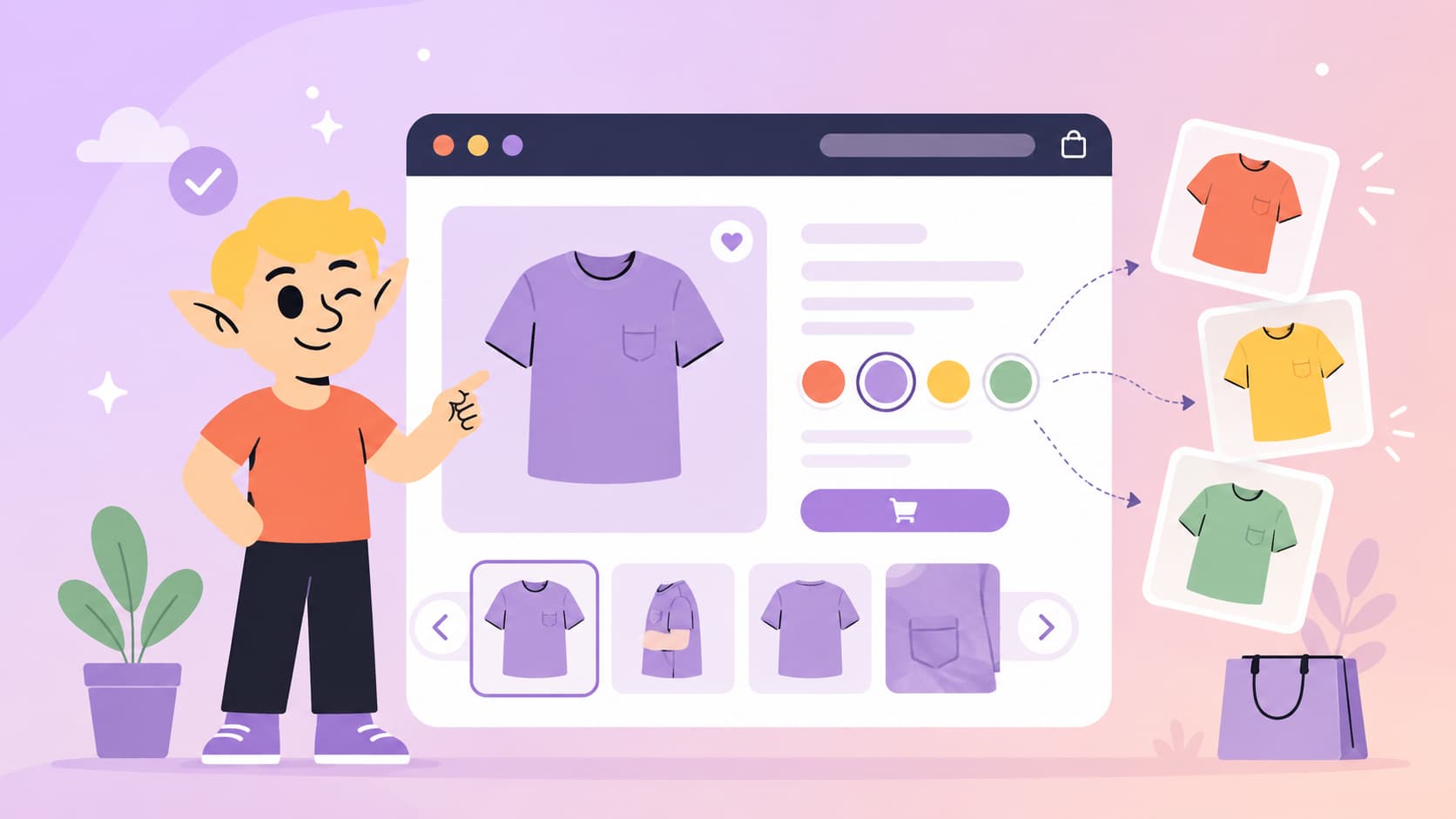
4. Show multiple angles and details
Customers are trying to replace a physical experience with a digital one. The more visual information you provide, the easier it becomes for them to make a decision.
Include a mix of:
- Wide shots that show the full product
- Close-ups that highlight materials and textures
- Different angles that reveal shape and structure
This reduces hesitation and answers questions before they are even asked.
5. Stop relying only on traditional photoshoots
This is where many store owners get stuck.
Traditional product photography is expensive, time-consuming, and difficult to scale. It works, but it creates a bottleneck, especially if you are constantly adding new products or testing variations.
Today, there is a better way.
Instead of organizing full photoshoots for every product, many stores are starting to use AI to enhance and expand their product imagery.
How AI is changing product images for Shopify
AI allows you to take a single product image and generate multiple high-quality variations from it.
This includes lifestyle images, different backgrounds, consistent brand styles, and even seasonal versions. Instead of planning everything in advance, you can generate what you need when you need it.
This completely removes the biggest limitations of traditional photography.
It also makes it possible for smaller stores to compete visually with much larger brands, without the same resources.
From one image to a complete product gallery
The real advantage is not just better images. It is scalability.
With the right approach, you can take one solid product image and turn it into a full gallery that includes different styles, angles, and contexts.
This means:
- Faster product launches
- More consistent branding
- Better testing of visuals
- Higher conversion potential
Instead of treating product images as a one-time task, they become something flexible and dynamic.
Final thoughts
Improving your product images is not about becoming a professional photographer.
It is about understanding how customers perceive your product through visuals and removing friction from that experience.
When your images are clear, consistent, and engaging, your store immediately feels more trustworthy. That trust translates directly into higher conversions.
In many cases, improving your images will have a bigger impact than changing your pricing, rewriting your descriptions, or running more ads.
Want to improve your product images faster?
If you want to skip the complexity of traditional photoshoots and upgrade your product images in minutes, you can try Pictu.
Start with one product and see how far you can take it.


.jpeg)
.jpg)